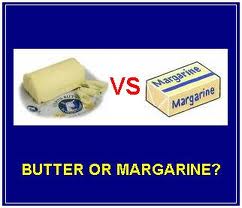
 The short mag “Experience Life” tells us that butter is making a comeback in many health conscious circles. To find out why, they talked to Sally Fallon Morell, MA, president of the Weston A. Price Foundation in Washington, D.C. The nonprofit research foundation is devoted to promoting traditional whole foods and reporting on related nutritional research.
There has been a long, deliberate campaign by the vegetable oil industry to demonize butter, and as a result, there’s been a lot of misguided media coverage suggesting that the saturated fats in butter are dangerous and that commercial margarines are a healthier choice. But the science in no way supports that notion. A large scale meta analysis reported in the American Journal of Clinical Nutrition in January 2010 found zero evidence linking saturated fat to heart disease.
First, butter is a natural food with a very balanced fatty-acid profile. And unlike margarines, it’s been safely consumed by humans as part of a whole foods diet for many centuries. Over the past few decades, mounting evidence shows that saturated fats from whole foods can be health supporting. A recent study of 3,376 adults by researchers at Harvard found that women with higher whole fat dairy intake had a higher HDL (good) cholesterol levels, lower triglyceride levels and lower insulin resistance. They also had a remarkably lower incidence of type 2 diabetes- a 59 percent reduction in risk. Other recent studies similarly vindicate saturated fat, and when butter is made from milk of grass fed cows, it’s quite high in nutrients- like vitamin A, D and K- that many Americans lack.
What’s wrong with butter substitutes?
Most are made from highly processed industrial oils that may be high in trans fat. Even those low in trans fats still contain badly damaged, rancid fatty acids that have been linked from everything from cancer and heart disease to learning problems. Our bodies simply don’t know how to process these types of substances. So, they wind up provoking inflammation and adding to our toxic load.

 My Crohnstipated Life
Leave a comment