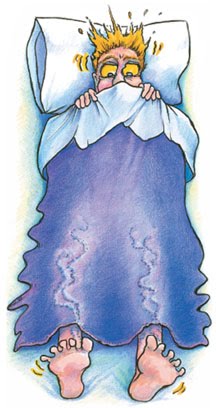
Kim from Facebook asked me to explain why Restless Leg Syndrome was a part or symptom of Crohns. I have to admit, I’ve never heard of anyone complain of this symptom as it is associated with Crohns. But I could see where they would both be linked as they are both associated with iron deficiency. Sleep disorders and fatigue are common in Crohn’s disease but no one has previously examined the role of RLS. A present study that I stumbled upon demonstrated that RLS is common in patients with Crohn’s disease. I’m pretty versed with RLS because my husband sometimes get it with certain medications but have never linked it with Crohns.
What is Restless Leg?
Restless legs syndrome (RLS), also known as Wittmaack-Ekbom’s syndrome, is a condition that is characterized by an irresistible urge to move one’s body to stop uncomfortable or odd sensations. It most commonly affects the legs, but can also affect the arms or torso, and even phantom limbs. Moving the affected body part modulates the sensations, providing temporary relief.
RLS causes a sensation in the legs or arms that can most closely be compared to a burning, itching, or tickling sensation in the muscles. Some controversy surrounds the marketing of drug treatments for RLS. It is a ‘spectrum’ disease with some people experiencing only a minor annoyance and others experiencing major issues.
RLS is either primary or secondary.
- Primary RLS is considered idiopathic, or with no known cause. Primary RLS usually begins before approximately 40 to 45 years of age. In primary RLS, the onset is often slow. The RLS may disappear for months, or even years. It is often progressive and gets worse as the person ages. RLS in children is often misdiagnosed as growing pains.
- Secondary RLS often has a sudden onset and may be daily from the very beginning. It often occurs after the age of 40, however it can occur earlier. It is most associated with specific medical conditions or the use of certain drugs
Underlying disorders
The most commonly associated medical condition is iron deficiency (specifically blood ferritin below 50 µg/L, which accounts for just over 20% of all cases of RLS. Other conditions associated with RLS include varicose vein or venous reflux, folate deficiency, magnesium deficiency, fibromyalgia, sleep apnea, uremia, diabetes, thyroid disease, peripheral neuropathy, Parkinson’s disease and certain auto-immune disorders such as Sjögren’s syndrome, celiac disease, and rheumatoid arthritis. RLS can also worsen in pregnancy. In a recent study, RLS was detected in 36% of patients attending a phlebology (vein disease) clinic, compared to 18% in a control group.
According to Juillerat P, Mottet C, Pittet V, et al. Extraintestinal manifestations of Crohn’s disease, bacterial overgrowth as a co-factor for RLS in Crohn’s disease is a consideration to explain the association in light of recent reports of the association of RLS in small intestinal bacterial overgrowth and three other gastrointestinal conditions that are associated with RLS which not infrequently have bacterial overgrowth. The inflammatory state from small intestinal bacterial overgrowth (18) or from Crohn’s
disease could be related to RLS possibly by direct or indirect stimulation of hepcidin with subsequent decreased central nervous system iron transportation.
Flares and Irritations
When my hubs takes a med that flares RLS it’s absolutely horrifying for him. He states “it’s enough to drive your literally crazy”. I thought at first he was acting, you know for a little sympathy. But as the days went on it became more apparently that it was so much more. He couldn’t sit, stand, lay down, or find any position that alleviates the condition. Moving around or even bathroom jaunts were painful and uncomfortable. His legs would actually move up and down as if he were on a stationary bike, and for me it seemed so irritating, but for him it was severe pain.
Treatment
We discovered that there are many variations of the condition as and much controversy about the diagnosis. When you google some meds, they will list this symptom as a side effect-so start there. Although, we diagnosed it our self pretty easily, the hubs just stopped taking the meds and switched to a different formula. There are medications for the symptom itself called; gabapentin and opioids can be used for treatment of resistant cases
Upon some googleness, research suggests that some try techniques as simple as hypnosis. Sounds really strange, I agree with you there. According to studies, the brain plays tricks: the uncontrollable and erratic movement was that the movement was the brain’s inappropriate over activity owing to the medication that the hubs was taking. His overactive mind was trying to accomplish things and solve problems and wouldn’t let his body rest. Studies find that an approach was to persuade overactive minds that the body needed rest. Studies state that by turning the relaxation into an active task that fully absorbed the unconscious mind, it would allowed itself to switch off the need to fidget and eventually relax.
Diagnosis
If one of your meds is causing this reaction, try this technique and see if it works for you. It did not work for the hubby, but he lacks patience anyway. If the symptoms of RLS is just to overwhelming for you, call your doctor and ask them rely on a good medical history and examination to prescribe you another type or brand.
Prevention
Other than preventing the underlying causes, no method of preventing restless legs has been established or studied.

 My Crohnstipated Life
Leave a comment